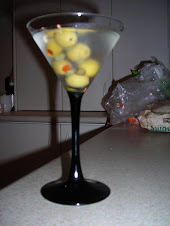
A discussion of contemporary issues in media ethics, with olives and a twist. Made with only the freshest ingredients, shaken, stirred and poured over ice. I should also mention that I do like the odd, occasional martini. Bombay Sapphire gin and Lillet, dry and plenty of salty olives. Welcome to this cocktail of journalism and alcohol. A fine combination!

Sunday, 9 March 2008

So hot. So Not!

This is just a chuckle piece.

The infamous Hollywood gossip-monger, Perez Hilton is now the subject of some interesting blogonews himself. Apparently he has been IMing with Jonathon Jaxson [sic] and there's sex tapes involved.

Yuksville, chucksville, but don't look away, car crash ahead! Jaxon seems obsessed with outing gay celebrities - what's that about in 2008. It's so yesterday.

I have no comment, check it out yourself:

Perez Hilton

Sex Scandal

Celebrity Buzz The blogger's in hot water for allegedly soliciting dirty videos from a naughty young man. You can breathe easy people: The sex tape in this scandal does not feature Mario "Perez Hilton" Lavandeira, he of the freakish hair. Instead, Lavandeira reportedly solicited sex tapes from another blogger in exchange for "help."


Does this stand as a case study in the differences between "real" and "accidental" journalists - the existence of a code of ethics and the fact that most journalists would take it seriously?

Hilton and his ilk are amusing (sometimes) and gross (most of the time), but they exist in our world now.

What I take some simple pleasure in is the way that other equally dubious blogspots have responded with clear contempt. The fruit does not fall far from the tree.

If this is the future of "journalism", I will drink myself to death!

Brothel client front page news? Not

An interesting read over my breakfast martini this fine Auckland Sunday. The Herald on Sunday ran a splash (admittedly below the 'fold') about a wealthy Aucklander who likes his social life a little on the spicy side: "Blue Chip man's brothel spend-up".

The unfortunate who's picture and private life were plastered across three pages of newshole (as only a splash can be plastered) is investment broker, rake-about-town and sometime property consultant, Mark Bryers.


Mr Bryers has been in the news recently about other more pressing matters - the investment vehicle Blue Chip has gone belly-up due to circumstances in the global property market and some local variations, such as the over-heated investment scene.

No doubt these events are newsworthy - after all, thousands of "mum & dad" investors (Does nobody else leave their money with shonks and sharks?) have lost their life savings. People like Charles and Lesley Rouse are upset (piss*d off mightly is perhaps a better description) that Mr Bryers and his associates are living large, while the hapless rubes who trusted them are forced to live virtually on the street.

But, does the fact that Mr Bryers likes saucy blondes and naughty redheads (often, it seems, in multiple combinations) add any real news value to the already sad story of the hardly-done-by Blue Chip investors?

Well, maybe, if one could make a solid connection between Mr Bryers' visits to the (ahem) "gentleman's club" in question [NSFW: don't click this link from the office desktop] then the revelations in the HoS could be justified. But I couldn't see any links between the Rouse's money and Mark Bryers prediliction for off-the-ledger rumpy-pumpy in the copy.

Bryers is allegedly worth $70 million (OK, so that's Kiwi dollars) but with that amount of credit, a night at the HQ (allegedly worth between five and ten $K) is hardly going to break the bank.

So, the question is: Why would the HoS consider that to be a newsworthy story? Bryers may not be full square and one has to feel sorry for the Rouses and anyone who's lost money in Blue Chip funds, but what about the separation between public interest and public curiosity or curious purience on the part of newspaper editors seeking an edge in the competitive Sunday tabloids market?

The HoS piece was also curious from another angle. In the story, the brothel-keeper is quoted several times, in one instance making veiled threats to the HoS journalist, Jane Phare, and advising her against publishing anything that identified the premises in question. What might the consequences be of this?

Has the newspaper put its staff in danger for the sake of a rakish and titillating headline?
Time will tell.

And what about the ethics of outing someone for sexual adventurism, which is legal and commonplace? If Mr Bryers has a partner, she/he might be well not happy, but it's not a criminal or social offence to visit a legal brothel and have consensual relations (of what ever vice-type) with the object of your desire.

Where do you draw the line once you start down this road? Remember recently the Australian PM was outed in The Daily Telegraph for visiting a strip club in New York while he was leader of the opposition? As the image here shows, long bows were drawn on this story too - this is an obvious digital composite.

If it was an attempt to nobble him it didn't work; what's the motive in the Bryers' case?

Off the record - Not!

So another Barak Obama staffer has fallen on her perfumed sword. This time because of comments in an interview with a British journalist about Hilary Clinton.

It's not the truth of Samantha Power's comments that's in question in this case: Hilary Clinton may well be a monster. It's not even the language, everyone's entitled to at least one "fu*k" a day.

It's because she made the mistake of thinking that such juicy comments would remain "off the record". A reasonable assumption perhaps given that she told the reporter the comments were off the record.

Here's how the story was covered by the Times Online:

Ms Power made the offending remark during a trip to London this week in which she was apparently too candid about the problems facing the Obama campaign.

"We f***** up in Ohio," she told the newspaper. "In Ohio, they are obsessed and Hillary is going to town on it, because she knows Ohio's the only place they can win.

"She is a monster, too – that is off the record – she is stooping to anything," Ms Power added. The newspaper described her as "hastily trying to withdraw her remark".

Scotsman editor Mike Gilson tonight stepped in to defend his use of the "off-the-record" quotes.

He said: "We have no opinion on whether Ms Power was right to quit and perhaps politics should be able to retain people with talent who are prepared to learn by their mistakes but we are certain it was right to publish. I do not know of a case when anyone has been able to withdraw on the record quotes after they have been made.

"The interview our political correspondent Gerri Peev conducted with Ms Power was clearly on an on-the-record basis. She was clearly passionate and angry with the tactics of the Clinton camp over the Ohio primary and that spilled over in the interview. Our job was to put that interview before the public as a matter of public interest. It was for others to judge whether the remarks were ill-judged or spoke of the inexperience in the Obama camp."


What happened here? It's clear from the Times piece above that Ms Power instantly regretted her comments and then added the line about them being "off the record". The question is: Did the reporter have to respect that?

Is it a case of "caveat emptor", or in this case "interviewee beware"?
As Dan Gilmor writes on his blog, Etcetera...,it would be unusual for a journalist to agree to something being "off the record" after the fact.
When I was a reporter and then a columnist, I had a rule that no public figure — that is, anyone who’d had experience with being interviewed — had the right to declare anything off the record after the fact. Now I might agree not to publish something if it wasn’t relevant, but if something was to be off the record it would be decided ahead of time.

I didn’t have the same policy with people who weren’t media-savvy. Sometimes I’d actually say to someone, “Do you realize that I what you’re telling me might go into the newspaper?” I’d let them reconsider their words.


This is a fair enough rule and perhaps Ms Power should have known better, but it's an all-too-familiar sign of what's wrong with American politics, in particular presidential campaigns, that someone should be forced to resign from their position over something as innocuous as the comments Samantha Power made in an un-guarded moment.

It's as if no one is allowed to actually tell the truth, or express a tough, forthright and honestly-held opinion.

It's faux-polite in my view. Obama and Clinton are both spending enough to wipe out poverty in a mid-sized third-world nation on their respective campaigns. There's negative commentary in the media all the time, fed by both camps.

In this case the frame of pretend-to-play-nice has been broken; some unwritten rule transgressed. I think it's a shame really; though I don't think any blame can be laid at the feet of the journalist, or the newspaper.
Live by the words; die by the words.

Of course there's plenty of commentary out there in the blogosphere

If we must teach shorthand what are we not teaching?

A friend, Helen M, sent me this link to a recent piece in the US online publication, PR Weekly, it talks about how journalism and journalism education are changing in response to the convergence factor of digital technology.

It lists a whole lot of new stuff that journalism educators and students are/should perhaps be doing in the classroom.

If we continue teaching shorthand,where do we find room for new stuff? What do we leave out?

It might be tempting to argue that more practical stuff should be included at the expense of what detractors call "theory", or "media studies". But what about journalism theory?

Isn't there a place in journalism education for an intellectual discussion about the values and meaning of journalism.

To deny space for such discussions is to doom journalism education and the reporters of the future to repeat the same mistakes over and over. Self-reflection is necessary for the news industry to cope with change; so to is a willingness to embrace change.

In particular, as the industry is changing younger reporters will need new and different skills; the definition of who is a journalist is also changing.

This is not necessarily a new idea, I've written about it in Communication & New Media (Hirst & Harrison 2007, OUP) in terms of the changing reportorial community.

Now this is an even more pressing issue because of the rise of the "accidental" journalist, not just the "citizen" journalist. Do we ignore this or embrace it?

There has to be room in the journalism curriculum for these issues to be put in front of students and we also have to think of these issues in terms of our current and future research.

Saturday, 8 March 2008

Who's still teaching shorthand?

Here in New Zealand all journalism schools require students to be proficient in T-line Shorthand at around 60-80 wpm before they can graduate.

The shorthand requirement is mandated by the NZ Journalists Training Organisation (JTO) as a Unit Standard for the qualification the National Diploma in Journalism. The diploma is a level 5 qualification, the equivalent to the first year of a university degree.

The journalism training in the Polytechnic system follows this syllabus quite closely while the university-based courses are at level 7 (3rd year undergraduate) or levels 8/9 Postgraduate Diploma and Masters level.

The JTO is an industry-funded body and industry members of the various J-schools' advisory committees are also strongly committed to the teaching and learning of shorthand.

While it's a requirement of the level 5 diploma (worth 15 credit points) there is some debate about the suitability of making shorthand a full 15 point paper within the normal academic framework of a bachelor's degree or postgraduate qualification.

Personally I'm not convinced that shorthand is still a necessary skill for 21st century journalists. I am forming the view that it is an antiquated technology that can easily be replaced with a variety of cheap, easy-to-use and unobtrusive digital recording devices that allow for accurate transcription of quotes and notes.

Here are a number of counter arguments that I've heard and I'm keen to see some real debate about this amongst journalism educators.

Arguments in favour of shorthand
  • shorthand notes are a legal document that can be used as evidence in a court case
  • shorthand is a vital skill for court reporters because in most jurisdictions cameras and recorders are not allowed in court during proceedings; further transcripts are hard to get from court officials and they take time to be released to the media
  • in New Zealand reporters are paid a bonus if they keep their shorthand up above a minimum speed requirement
I think things are changing. Increasingly cameras are being seen in courts, though I understand that this is an uneven process. I also don't think that reporters are called upon to give evidence from their shorthand notes in many court cases; so this is a "just in case" type of argument in effect. Finally, the bonus is a matter of a handful of dollars a week.

I'm going to go out on a limb here and suggest that by insisting that accredited journalism schools teach shorthand (often at great expense), the industry is merely pushing the cost onto the students and the tertiary education system. maybe the employers should be paying for it; either by subsidising the j schools to teach it, or doing it in-house once they get their hands on our graduates.

I'm currently looking into this issue in other countries and I'd be very keen to hear from journalism educators and working reporters about the use-value of shorthand. I know that anecdotally some of our graduates are alleged to say things like "shorthand is the most useful thing I learned at journalism school."

If this is really the case that what are we doing? Surely the value of a good education in journalism is more than 80 wpm of T-line.

The global situation?
A quick google search turned up some interesting material about the teaching of shorthand, including this interesting prediction that it would disappear from the journalism curriculum in 5-10 years...this was in 1998:

Bernie Corbett, national organizer for Britain’s National Union of Journalists, explained that most journalism jobs there require an academic “qualification.” And, he said, most print journalism degree programs require shorthand skills of 100 words per minute.

“Currently, trainers and editors still maintain that it is an indispensable core skill,” Corbett said, “but modern attitudes are against them and I predict the requirement will be dropped some time in the next five to ten years.”

Then again, is shorthand likely to become the next battle ground between the industry and the academy? Certainly that appears to be the case in the UK where the industry training body the NCTJ has been making the argument that journalism courses are too "academic" and not "practical" enough. According to Andy Bull, a senior NCTJ official, shorthand is still an essential:
"For editors and for the NCTJ, shorthand is essential. Universities have a problem with shorthand because they see it purely as a mechanical skill. Never mind that it is hard to manage as a foreign language."
I found this quote in a blog by Steve Hill, a lecturer in electronic publishing at Southampton Solent University, where he discusses Bull's piece from the British Journalism Review. Unfortunately the full copy of Andy's piece is not available online.

I also found an Australian reference to the JSchool run by Professor John Henningham in Brisbane (Queensland). Students in his privately-run programme do get some shorthand training.

I'm keen to hear from journalism educators and reporters on this issue.
To kick off some discussion, here's the txt of an email my colleague Stephen Quinn sent from Deakin University in Victoria (Australia):

The relevance depends on what you are educating J students for. If for
a career in mainstream print media, then you could argue shorthand is needed. Many
years ago I proposed to our dean that we teach Teeline (rather than Pittman's) on
the journalism major at Deakin. She said that was the role for the local TAFE, and
not a university.

Given the dramatic drop in jobs at newspapers in the US (see my blog squinn.org for
details), and if that trend carries over into Australia, we could argue that more jobs will be available online and in other forms of new media. Then we have
to ask if shorthand is relevant, given many of the newer jobs will involve
re-purposing of content (yes, an ugly phrase but the best I have) and editing rather than reporting.

Bottom line: if educating reporters, then shorthand is still necessary. If educating
editors, debatable.


Over to you.
BTW: If you're a journalism student, I'd love to hear from you too.

Friday, 7 March 2008

Taste Test: The Journalist

perhaps we can all go get one after graduation next friday as we will be qualified journos!
- bex
Hey, bex, xclnt idea to go for a drink. In our graduation drag?

But, I would recommend caution when it comes to The Journalist, or at least finding a bar with a v.good cocktail mixologist. This is not a drink to let loose around amateurs.

I had a couple earlier this week at a local bar (no names coz I don't want to upset anyone at the Brooklyn) and to be honest, I was a tad disappointed.

When I say "tad" I been bloody disappointed. The colour was good; the ingredients were pretty much top shelf- Bombay, Cointreau and Martini vermouth(s)

[Is the plural of vermouth "vermine"?]
But the mixing was ordinary. The drink was warmish, while a great Martini is chilled beyond cool and I expected a great kick, but all I got was a sweetish, warm lolly-water drink. it lacked bite and even the addition of a triple-olive stick with a twist didn't seem to lift it beyond the "gin ordinaire".

I'm sure that Frank Moorhouse and his friend Voltz would strongly disapprove of The Journalist; it would rank alongside the other "fad" concoctions and "crazy drinks" that they both detest.

However, I am not easily deterred and I intend to persist until I can make this drink my own.

On a slighlty different note, I enjoyed Moorhouse' "memoir" Martini, and at the time I thought it was a reasonably true account of some aspects of his life. So I was very disappointed to come across this old bit of news while I was googling him today.

It seems that the "memoir" may actually be a work of fiction, in the news story linked above Moorhouse refers to himself (or is it a character in the "memoir") as "the demented narrator-author".

That's almost as disappointing as a lukewarm Journalist.

Tuesday, 4 March 2008

A "new" Martini: The Gin and the Journalist

One of the things I love about teaching is learning from my students. Hat tip to Quinn for telling me about The Journalist.

I suppose a purist would scoff, but it is a distant relative of the Martini - at least it's based on Gin and Vermouth.

It's a take on the whole dry/sweet thing and I must say I am constantly surprised at the number of bar staff who think it's OK to make a Martini with sweet vermouth - "Bianco".

Personally I find the combination distasteful, but rarely send it back. I much prefer the traditional dry Martini.

However, The Journalist is on my menu for the next Brooklyn visit.

Quinn brought me a photocopied page from his cocktail recipe book, here's the author's review of this unconventional Martini.

I've never been a supporter of unnecessarily complicated cocktails but this one seems to succeed against all the odds.

The Journalist defies convention [you're right about that mate] but is great as a palate-cleansing aperitif.

The sweet/dry theme is repeated twice, with the sweet and dry vermouth, then the triple sec and lemon juice.

Definitely a good pre-dinner drink to order at a bar, but if you're making it at home watch the measurements carefully, it's a drink that needs to be very finely balanced.


On the web you can find plenty of recipes for The Journalist, some use Curacao instead of Triple Sec. I'm sure you could substitute Vodka for Gin too. You know the rules "Choose your poison."

But what's with this glass, it just ain't right:
Journalist

I much prefer the conventional frosted Martini glass, so much more refined.

If you're willing to try The Journalist, send me a note, rate it.

Here's the recipe with Curacao (from Cocktail Database), use Triple Sec and/or Vodka if you like.

The Journalist
Stir in mixing glass with ice & strain
1 1/2 oz gin (4.5 cl, 3/8 gills)
1/4 oz sweet vermouth (6 dashes, 1/16 gills)
1/4 oz dry vermouth (6 dashes, 1/16 gills)