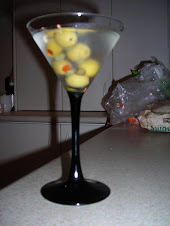
An interesting read over my breakfast martini this fine Auckland Sunday. The Herald on Sunday ran a splash (admittedly below the 'fold') about a wealthy Aucklander who likes his social life a little on the spicy side: "Blue Chip man's brothel spend-up".
The unfortunate who's picture and private life were plastered across three pages of newshole (as only a splash can be plastered) is investment broker, rake-about-town and sometime property consultant, Mark Bryers. 
Mr Bryers has been in the news recently about other more pressing matters - the investment vehicle Blue Chip has gone belly-up due to circumstances in the global property market and some local variations, such as the over-heated investment scene.
No doubt these events are newsworthy - after all, thousands of "mum & dad" investors (Does nobody else leave their money with shonks and sharks?) have lost their life savings. People like Charles and Lesley Rouse are upset (piss*d off mightly is perhaps a better description) that Mr Bryers and his associates are living large, while the hapless rubes who trusted them are forced to live virtually on the street.
But, does the fact that Mr Bryers likes saucy blondes and naughty redheads (often, it seems, in multiple combinations) add any real news value to the already sad story of the hardly-done-by Blue Chip investors?
Well, maybe, if one could make a solid connection between Mr Bryers' visits to the (ahem) "gentleman's club" in question [NSFW: don't click this link from the office desktop] then the revelations in the HoS could be justified. But I couldn't see any links between the Rouse's money and Mark Bryers prediliction for off-the-ledger rumpy-pumpy in the copy.
Bryers is allegedly worth $70 million (OK, so that's Kiwi dollars) but with that amount of credit, a night at the HQ (allegedly worth between five and ten $K) is hardly going to break the bank.
So, the question is: Why would the HoS consider that to be a newsworthy story? Bryers may not be full square and one has to feel sorry for the Rouses and anyone who's lost money in Blue Chip funds, but what about the separation between public interest and public curiosity or curious purience on the part of newspaper editors seeking an edge in the competitive Sunday tabloids market?
The HoS piece was also curious from another angle. In the story, the brothel-keeper is quoted several times, in one instance making veiled threats to the HoS journalist, Jane Phare, and advising her against publishing anything that identified the premises in question. What might the consequences be of this?
Has the newspaper put its staff in danger for the sake of a rakish and titillating headline?
Time will tell.
And what about the ethics of outing someone for sexual adventurism, which is legal and commonplace? If Mr Bryers has a partner, she/he might be well not happy, but it's not a criminal or social offence to visit a legal brothel and have consensual relations (of what ever vice-type) with the object of your desire.
Where do you draw the line once you start down this road? Remember recently the Australian PM was outed in The Daily Telegraph for visiting a strip club in New York while he was leader of the opposition? As the image here shows, long bows were drawn on this story too - this is an obvious digital composite. If it was an attempt to nobble him it didn't work; what's the motive in the Bryers' case?
Sunday, 9 March 2008
Brothel client front page news? Not
Off the record - Not!
So another Barak Obama staffer has fallen on her perfumed sword. This time because of comments in an interview with a British journalist about Hilary Clinton.
It's not the truth of Samantha Power's comments that's in question in this case: Hilary Clinton may well be a monster. It's not even the language, everyone's entitled to at least one "fu*k" a day.
It's because she made the mistake of thinking that such juicy comments would remain "off the record". A reasonable assumption perhaps given that she told the reporter the comments were off the record.
Here's how the story was covered by the Times Online:
Ms Power made the offending remark during a trip to London this week in which she was apparently too candid about the problems facing the Obama campaign.
"We f***** up in Ohio," she told the newspaper. "In Ohio, they are obsessed and Hillary is going to town on it, because she knows Ohio's the only place they can win.
"She is a monster, too – that is off the record – she is stooping to anything," Ms Power added. The newspaper described her as "hastily trying to withdraw her remark".
Scotsman editor Mike Gilson tonight stepped in to defend his use of the "off-the-record" quotes.
He said: "We have no opinion on whether Ms Power was right to quit and perhaps politics should be able to retain people with talent who are prepared to learn by their mistakes but we are certain it was right to publish. I do not know of a case when anyone has been able to withdraw on the record quotes after they have been made.
"The interview our political correspondent Gerri Peev conducted with Ms Power was clearly on an on-the-record basis. She was clearly passionate and angry with the tactics of the Clinton camp over the Ohio primary and that spilled over in the interview. Our job was to put that interview before the public as a matter of public interest. It was for others to judge whether the remarks were ill-judged or spoke of the inexperience in the Obama camp."
What happened here? It's clear from the Times piece above that Ms Power instantly regretted her comments and then added the line about them being "off the record". The question is: Did the reporter have to respect that?
Is it a case of "caveat emptor", or in this case "interviewee beware"?
As Dan Gilmor writes on his blog, Etcetera...,it would be unusual for a journalist to agree to something being "off the record" after the fact.
When I was a reporter and then a columnist, I had a rule that no public figure — that is, anyone who’d had experience with being interviewed — had the right to declare anything off the record after the fact. Now I might agree not to publish something if it wasn’t relevant, but if something was to be off the record it would be decided ahead of time.
I didn’t have the same policy with people who weren’t media-savvy. Sometimes I’d actually say to someone, “Do you realize that I what you’re telling me might go into the newspaper?” I’d let them reconsider their words.
This is a fair enough rule and perhaps Ms Power should have known better, but it's an all-too-familiar sign of what's wrong with American politics, in particular presidential campaigns, that someone should be forced to resign from their position over something as innocuous as the comments Samantha Power made in an un-guarded moment.
It's as if no one is allowed to actually tell the truth, or express a tough, forthright and honestly-held opinion.
It's faux-polite in my view. Obama and Clinton are both spending enough to wipe out poverty in a mid-sized third-world nation on their respective campaigns. There's negative commentary in the media all the time, fed by both camps.
In this case the frame of pretend-to-play-nice has been broken; some unwritten rule transgressed. I think it's a shame really; though I don't think any blame can be laid at the feet of the journalist, or the newspaper.
Live by the words; die by the words.
Of course there's plenty of commentary out there in the blogosphere
2
comments
 Labels:
journalism ethics,
off the record
Sunday, 20 January 2008
Facebook and the news
Murder victim opened her heart on Facebook - Sunday Star-Times - Sunday Star-Times
In light of recent posts about Facebook and other social networking sites, I thought it time to give a brief outline of my "theory" about this. I have mentioned previously I'm currently writing a book about news in the digital age.
I haven't settled on a title yet, but it's likely to be something like Journalism in the Age of YouTube.... I'm not sure, but the thrust is that I am writing about how social networking sites; the internet and blogging are impacting on journalism. The types of stories; the sources and even journalists themselves are caught up in this.
I just wanted here to draw attention to the ways in which Facebook, Bebo etc are now being used extensively as a "source" for reporters. Usually in the context of horrible murders, like the one discussed in the SST article linked above. In the print edition the frontpage splash is illustrated with photos taken from Sophie Elliott's Facebook page, including a photo of her with her alleged killer.
I wonder did the SST get anyone's permission, presumably Sophie's family, to use this pic, or any pic of her from Facebook? Or is the assumption that because Facebook is 'public', no permission is required, stuff can just be ripped from there without regard to privacy or copyright issues.
And what about potential contempt of court. A photo of the alleged killer - can this influence potential jurors?
then there's this piece from the SST's sister paper, Sunday News
Another horrible murder and another "news" link with social networking. In this case the brother of the murdered Scottish tourist pleading with her to come home:
Come home Karen
KRISTIAN SOUTH - Sunday News | Sunday, 20 January 2008
The brother of murdered Scottish backpacker Karen Aim had no doubt where he wanted his sister to be when he made an emotional internet plea to her just after New Year.
"Forget this glass blowing carry on at the other side of the world," Alan Aim, 23, wrote on his sister's page on the Bebo social network website.
"My Orkney road passenger transport ambitions have doubled and could do with a bit of extra resources pulled together!
"Don't reply to this, just get yourself back here."
But instead of flying back to help Alan with his tourist travel business on the Orkney Islands off the coast of Scotland, 26-year-old Karen stayed on in Taupo partying with friends, working in a glass-blowing gallery and settling into the Kiwi summer.
Her decision to remain in New Zealand proved fatal on Thursday morning, when she was bashed to death just 50m from her home. She told police her name with her dying breath.
The emotional tug of this is palpable. But what about the invasion of privacy? Oh, there is none. Bebo is like a public park. If you stand in the park and have a conversation, and a reporter overhears it, would you expect it to be in the next day's paper?
We haven't seen the end of this explosion of cheap and nasty news based on shameless plundering of Facebook etc.
It should be a warning to us all. In cyberspace, the eyes of the world are on you. This is a surveillance society, even in tragic death.
I am keen for readers of Ethical Martini to draw my attention to stories, from anywhere in the world, that take up the themes that might be interesting for my book. All tips gratefully acknowledged. The best way to do that might be just to drop a few lines into a comment on a post that catches your eye. Or you can email me driect at the address in the top right corner of the page.
Sunday, 6 January 2008
Bloggers and Journalists: Friends or Foes? : CyberJournalist.net
Bloggers and Journalists: Friends or Foes? : CyberJournalist.net
Audio and video of the blogging panel from this year’s Society of Professional Journalists Convention:
Legal action against bloggers has skyrocketed during the past three years. While some cases have merit, most are lawsuits designed to suppress free speech. Meanwhile, journalists have sought to differentiate themselves from bloggers through self-regulation and legislation. But should they? As new organizations have begun to embrace blogs and user-generated content, the “blogging v. journalism” debate has begun to dissolve, replaced instead by a greater awareness that what threatens bloggers today may well threaten professional journalists tomorrow.
— Watch video (67.2 MB, 33:34)
— Listen to or download audio
Friday, 7 September 2007
Robert Capa - was that photograph really real?
For many years I've been talking to my students about the ethical dilemmas associated with photojournalism. One of the key case studies that we discuss is the image of a Spanish soldier at the point of death that Magnum agency photographer Robert Capa took in 1936.
In the shot the Loyalist soldier appears to be falling back after being hit by a sniper's bullet.
For years there's been controversy around this image. Some historians and journalists, notably Philip Knightley, have argued that this is a faked image. Posed by the soldier for Capa's camera.
In a review of a biography of Capa (Blood and Champagne by Alex Kershaw), Knightley is scathing in his attack on the man, and the famous image.
Let’s get the bad stuff over first. Robert Capa was a liar, a compulsive gambler, a depressive, a heavy drinker, and a womaniser (especially with prostitutes). He used people, broke promises and when he was accused of being a communist and the U.S. State Department kept his passport, he “named names”, to get it back.
At the urging of the appalling Henry Luce, the founder of Life and producer of the March of Time newsreel series, he staged Republican attacks on Fascist positions during the Spanish Civil War and filmed them, noting that they looked “more real” than if they had actually taken place. And, I maintain, he faked the most famous war photograph of all time, the Spanish soldier at the moment of death.
But the Wikipedia entry and other bloggers have suggested that it's real. The entry is quite clear on the story, but doesn't mention Knightley's criticism:
From 1936 to 1939, he was in Spain, photographing the horrors the Spanish Civil War. In 1936, he became known across the globe for a photo he took on the Cordoba Front of a Loyalist Militiaman who had just been shot and was in the act of falling to his death. Because of his proximity to the victim and the timing of the capture, there was a long controversy about the authenticity of this photograph. Historians eventually succeeded in identifying the dead soldier as Federico Borrell García, from Alcoi (Valencia) and proved it authentic. [1] This is one of the best-known pictures of the Spanish civil war.This position receives some support, for example this comment from a discussion thread at photo.net:
The photo has been proved to be in no way "a set up" by the photographer, despite a claim by someone who wasn't anywhere near the place where it happened.In a response this this, another post suggested:
I never said the photograph was a hoax. Robert Capa had asked the soldier to perform for a photograph(duck and roll I believe) when he was shot and killed(in reality)In amongst all the discussion of cameras, lenses and focal lengths, there's some support for Capa on the photo.net site. Here's another post on a different thread that seems to support the Wikipedia entry:
Knightley claims to have proved in 1974, Capa Falling Loyalist Solider photo was faked. Well, a few years ago, the soldier was positively identified by records and family members. Knightley still refuses to accept this. A long time ago, I read his evalution and found it lacking. In addition, I believe, he did not have access to the Capa archives and never saw the original contact sheet(s) from the event. The original negative has been lost. The very best source of ACCURATE Robert Capa facts, is the Richard Whelan biography, first published in 1985.There is a piece by Richard Whelan online that backs this story and provides more detail. This extract talks about the controversy and maintains that the image is real. However, it says here that the soldier was a Republican fighter. I thought the Loyalists were Francos' fascists. I've always thought the image was of a Republican and given Capa's political leanings I would imagine he would have been with Republican units, not Franco's.
After photographing in Barcelona, Capa and Taro went to the stalemated Aragón front, where they visited the militia of the Trotskyite POUM (Partido Obrero de Unificación Marxista) that George Orwell would serve with that winter. Capa and Taro then moved south toward Andalucía. Republican forces had begun an offensive to recover Córdoba, and the Madrid government reported new advances daily, even emptily boasting that its troops had entered the city. For photographers eager to cover Republican victories, the Córdoba front was a compelling destination.There is another, more detailed account of this story from Richard Whelan at PBS, written in 2002. This image purports to show the relative positions of Borell Garcia and Capa, taken from a trench on the front lines.
There, just outside the tiny village of Cerro Muriano, on September 5, 1936, a 22-year-old Capa made one of his most famous images, perhaps the greatest of all war photographs—that of a Republican militiaman who has just been shot and is collapsing into death.
The internal evidence of the series of photographs to which that picture belongs suggests that Capa ran down a barren hillside with the vanguard of a Republican attack, and, as they came into range of an enemy emplacement, he threw himself down and hugged the ground (as we can see from the camera angle); from there he photographed several men as they were shot in succession. “Falling Soldier” received its first publication soon afterward in the September 23, 1936, issue of Vu.
In 1975, a controversy began over the authenticity of Capa’s great photograph when O’Dowd Gallagher, an elderly British journalist of failing memory, charged that the photograph was staged. The claim was published in Phillip Knightley’s book The First Casualty: From the Crimea to Vietnam: The War Correspondent as Hero, Propagandist, and Myth Maker.
In a world always eager to believe the worst, Gallagher’s allegations spread rapidly. Refuting evidence was largely ignored. In September 1996, however, the controversy was definitively settled in Capa’s favor by the discovery of the identity of the man in the photograph—Federico Borrell García, whose death at Cerro Muriano, on September 5, 1936, is recorded in the Spanish government’s archives and whose identity in the photograph was confirmed by his younger brother, Everisto.
Through circumstantial evidence, which I pieced together while working on my biography of Capa, we know for certain that Capa and Taro were in Cerro Muriano on that day. Indeed, on the vintage prints preserved in the files of Capa’s estate with their original chronological numbering, the numbers on the sequence of pictures to which the “Falling Soldier” belongs immediately precede those of a Cerro Muriano refugee series. The numbering on the vintage prints clearly suggested that Capa made his “Falling Soldier” picture at Cerro Muriano on September 5, 1936. Capa repeatedly confirmed during his lifetime that he had made his photograph on the Córdoba front.
 Here's Whelan's final thoughts on the subject, from the PBS American Masters documentary on Capa:
The arrow indicates [in the photo above] where Federico Borrell García was standing when he was shot; the X indicates where Capa was hugging the side of the gully.Whelan provides more photographic evidence in this piece, published in 2003.
There can be no further doubt that The Falling Soldier is a photograph of Federico Borrell García at the moment of his death during the battle at Cerro Muriano on September 5, 1936. May the slanderous controversy that has plagued Robert Capa’s reputation for more than twenty-five years now, at last, come to an end with a verdict decisively in favor of Capa’s integrity. It is time to let both Capa and Borrell rest in peace, and to acclaim The Falling Soldier once again as an unquestioned masterpiece of photojournalism and as perhaps the greatest war photograph ever made.
I haven't been able to find any response to this from Phillip Knightley. If you know of one, perhaps you could let me know.
Wednesday, 15 August 2007
Objectivity and Market-Driven Journalism
At the Journalism Matters conference recently (see earlier posts on this), I got into a mini argument with a colleague about what should be taught in journalism schools about objectivity. He was quite miffed when I said that I don't teach it at all. I think it's an ideological myth, part of the mists of spin that revolve around the concept of professionalism. We cannot separate ourselves from our thoughts, our beliefs, or our work.
I was surprised, in a way, that there are still some old hands out there who think that journalists are not only supposed to be objective, but that it's actually possible.
Even when it's not, they argue, the "free" market will sort out the wheat from the chaff. Unfortunately, in my 50 years of living in a market economy I've grown to believe that there is no f*cking wheat, only various grades of mostly unpalatable chaff.
The market cannot solve the basic fault line in journalism-- between the public interest and the profit motive. This is a dialectic contradiction that is built in to the system. In fact, it is the bl**dy system.
In 2003, the Columbia Journalism Review published piece, by Brent Cunningham is called "Re-thinking objectivity". It seems to me that he might be on to something.
The debate has now broken out into the blogosphere, here's some samples of what's being said:
This isn't to say that the objectivity problem is unsolvable, only that it's going to take time, and it will have to be done incrementally. Paul McLearyThis is like saying we can incrementally get rid of capitalism by convincing the capitalists, one by one, to give up their stolen wealth.
Mark Kleiman, over at The Reality-Based Community, has a different view:
To me this is not a bad position. There is "objectivity", if you like, in the natural world. It rains and we get wet, there are floods and bridges collapse. If we don't eat and drink well, we die. Smoking causes lung cancer. These are "facts", but when we get into the murky social world of politics, economics and spin. Where the hell is the factual truth? It's not some middle ground of "balance". There's right and there's wrong.A news account isn't an editorial. The ideal-type "reporter" is supposed to give "just the facts, ma'am," and not his or her own opinions.
This creates a problem when a reporter has to report false statements, especially by candidates for office. If a candidate says that the Earth is flat (or that tax cuts lead to revenue increases, or that there's still legitimate doubt about anthropogenic global warming, or that soldiers in Iraq are mostly fighting al-Qaeda) should the reporter "objectively" simply report the statement, or should she add the objective fact that the world is actually round?
Going back to Cunningham's original piece, he puts this into the context of the invasion of Iraq in March 2003:
Before the fighting started in Iraq, in the dozens of articles and broadcasts that addressed the potential aftermath of a war, much was written and said about the maneuverings of the Iraqi exile community and the shape of a postwar government, about cost and duration and troop numbers. Important subjects all. But few of those stories, dating from late last summer, delved deeply into the numerous and plausible complications of the aftermath. That all changed on February 26, when President Bush spoke grandly of making Iraq a model for retooling the entire Middle East. After Bush's speech "aftermath" articles began to flow like the waters of the Tigris — including cover stories in Time and The New York Times Magazine — culminating in The Wall Street Journal's page-one story on March 17, just days before the first cruise missiles rained down on Baghdad, that revealed how the administration planned to hand the multibillion-dollar job of rebuilding Iraq to U.S. corporations. It was as if the subject of the war's aftermath was more or less off the table until the president put it there himself.
There is no single explanation for these holes in the coverage, but I would argue that our devotion to what we call "objectivity" played a role. It's true that the Bush administration is like a clenched fist with information, one that won't hesitate to hit back when pressed. And that reporting on the possible aftermath of a war before the war occurs, in particular, was a difficult and speculative story.
Cunningham makes some good points, among them:
- Objectivity has persisted for some valid reasons, the most important being that nothing better has replaced it.
- But our pursuit of objectivity can trip us up on the way to "truth." Objectivity excuses lazy reporting.
- It exacerbates our tendency to rely on official sources, which is the easiest, quickest way to get both the "he said" and the "she said," and, thus, "balance."
- More important, objectivity makes us wary of seeming to argue with the president — or the governor, or the CEO — and risk losing our access.
- Finally, objectivity makes reporters hesitant to inject issues into the news that aren't already out there.
- In short, the press's awkward embrace of an impossible ideal limits its ability to help set the agenda.
- If space is a problem, time is an even greater one. The nonstop news cycle leaves reporters less time to dig, and encourages reliance on official sources who can provide the information quickly and succinctly.
- Meanwhile, the Internet and cable news's Shout TV, which drive the nonstop news cycle, have also elevated the appeal of "attitude" in the news, making the balanced, measured report seem anachronistic.
- Perhaps most ominous of all, public relations, whose birth early in the twentieth century rattled the world of objective journalism, has matured into a spin monster so ubiquitous that nearly every word a reporter hears from an official source has been shaped and polished to proper effect.
- The genuflection toward "fairness" is a familiar newsroom piety, in practice the excuse for a good deal of autopilot reporting and lazy thinking but in theory a benign ideal.
- Reporters are biased, but not in the oversimplified, left-right way that Ann Coulter and the rest of the bias cops would have everyone believe.
- Mostly, though, we are biased in favor of getting the story, regardless of whose ox is being gored.
I think the most telling point, and the one that puts the kybosh on any bullsh*t about the virility of market forces, is the issue of class. Here's Cunningham's take, and I agree wholeheartedly:
Arguably the most damaging bias is rarely discussed — the bias born of class. A number of people interviewed for this story said that the lack of socioeconomic diversity in the newsroom is one of American journalism's biggest blind spots. Most newsroom diversity efforts, though, focus on ethnic, racial, and gender minorities, which can often mean people with different skin color but largely the same middle-class background and aspirations. At a March 13 panel on media bias at Columbia's journalism school, John Leo, a columnist for U.S. News & World Report, said, "It used to be that anybody could be a reporter by walking in the door. It's a little harder to do that now, and you don't get the working-class Irish poor like Hamill or Breslin or me. What you get is people from Ivy League colleges with upper-class credentials, what you get is people who more and more tend to be and act alike." That, he says, makes it hard for a newsroom to spot its own biases.He continues, and again, I concur:
It is important, always, for reporters to understand their biases, to understand what the accepted narratives are, and to work against them as much as possible. This might be less of a problem if our newsrooms were more diverse — intellectually and socioeconomically as well as in gender, race, and ethnicity — but it would still be a struggle. There is too much easy opinion passing for journalism these days, and this is in no way an attempt to justify that. Quite the opposite. We need deep reporting and real understanding, but we also need reporters to acknowledge all that they don't know, and not try to mask that shortcoming behind a gloss of attitude, or drown it in a roar of oversimplified assertions.
I come not to praise objectivity, but to bury it. Any decent journalist who has a questioning mind should immediately abandon any attempt at objectivity and, instead, embrace their own political soul. Journalism should be about challenging the status quo, pushing for change and arguing for the oppressed and the underdog. I encourage my students to read George Orwell, particularly this passage from "Why I Write":
Every line of serious work that I have written since 1936 has been written, directly or indirectly, against totalitarianism and for democratic socialism, as I understand it. It seems to me nonsense, in a period like our own, to think that one can avoid writing of such subjects. Everyone writes of them in one guise or another. It is simply a question of which side one takes and what approach one follows. And the more one is conscious of one's political bias, the more chance one has of acting politically without sacrificing one's aesthetic and intellectual integrity.What I have most wanted to do throughout the past ten years is to make political writing into an art. My starting point is always a feeling of partisanship, a sense of injustice. When I sit down to write a book, I do not say to myself, ‘I am going to produce a work of art’. I write it because there is some lie that I want to expose, some fact to which I want to draw attention, and my initial concern is to get a hearing. But I could not do the work of writing a book, or even a long magazine article, if it were not also an aesthetic experience. Anyone who cares to examine my work will see that even when it is downright propaganda it contains much that a full-time politician would consider irrelevant. I am not able, and do not want, completely to abandon the world view that I acquired in childhood. So long as I remain alive and well I shall continue to feel strongly about prose style, to love the surface of the earth, and to take a pleasure in solid objects and scraps of useless information. It is no use trying to suppress that side of myself. The job is to reconcile my ingrained likes and dislikes with the essentially public, non-individual activities that this age forces on all of us.
We live in such an age. The struggle between totalitarian ideologies, states and systems is going on all around us. Who can choose sensibly between the greedheads in Washington and the crazy mullahs in Teheran? It is, in my view, similar to the scenario that Orwell describes in 1984. A global war in which both sides struggle for a hegemony that can only come at the expense of real people.
That is the truth, but it sure ain't objective.
1 comments
Labels:
journalism ethics,
objectivity
A commercial news media blog about journalism - a rare bird?

Public Eye: CBS News Blogs and Editorial Forum - CBSNews.com
The CBSNews.com website hosts an interesting blog that I've just come across. (I know, you've all been there, done that.) It's a noble mission on behalf of CBS...
Public Eye’s fundamental mission is to bring transparency to the editorial operations of CBS News — transparency that is unprecedented for broadcast and online journalism.That's totally refreshing. It's not just CBS journos posting here, the key dude is Brian Montopoli, who previously worked for the respected Columbia Journalism Review.
Public Eye's worth checking out and there's an RSS feed available too.
0
comments
Labels:
blogging,
CBS network,
journalism ethics
Friday, 6 July 2007
More on Ms Mirthala Salinas

The Spanish-language television news anchor, Mirthala Salinsa, who has been outed for a two-year affair with Los Angeles mayor, Antonio Villaraigosa, (shown pictured, right) continues to make headlines around the world.
Ms Salinas has been condemned for a serious breach of ethics - basically that reporters don't sleep with sources. I've been around long enough to know that this is not the first, or last time this will happen. Politico-journo marriages and affairs have been a staple of reporters' bar room gossip for hundreds of years. News is sexy; it's exciting and there's always plenty of hormonal "juice" in the air.
However, that's no justification it seems. This is because the other side of journalism is quite nasty. If there's blood in the water, or a sniff of scandal in the air, all bets and confidences are off.
The bottom line though, is that the noise and blather about this case is hypocritical. The unwritten code has always been, "Don't ask, don't tell," but when the rumours are confirmed, like in this story, "move in for the kill."
Unfortunately, the mayor will probably survive - after all he's a bloke who can't keep it in his pants (entirely excusable in the topsy-turvy world of sexual politics). She on the other hand is obviously a sl*t who's an insatiable Latina nymphomaniac and she deserves to be burned at the stake like the obvious witch she is (I'm being sarcastic here, just in case you can't read between the lines).
To follow this story, try these links:
- The Guardian (London)
- Steve Lopez in the LA Times (has a bit of a go at the mayor)
- Full coverage from the LA Times (the history of the story)
- A compile of blogs and news from Technocrati
- Dogpile (all that needs to be said)
Wednesday, 25 April 2007
The End of Journalism?
Journalism & Media Discussion Forum: The End of Journalism?
Adrian Monck is the head of journalism at City University London, the link here is to his recent post on "the end of journalism" blogsite.
Is there a link between journalism and democracy? In theory "yes", but it needs to be much more carefully unpacked and analysed.
Most of the world has some resemblance to "democracy", but usually of a limited, restricted parliamentary sort. In some parts of the world the values of democracy are already under threat.
The fourth estate model of journalism is discredited and news workers are generally seen as lacking in ethics and credibility.
The key paradox for me is in the duality of the news commodity. Journalism is, as Monck says, both an information source and a watchdog. But this is fatally flawed by the commercial imperative of the market system. The ethical imperative of journalism - to support democracy - is undermined by the cash imperative of capitalism.
Social Networks making news
Press Gazette: How should journalists use social media material?
It's interesting this discussion is starting now. I told my students in a lecture yesterday that there's going to be more of this - using MySpace, Facebook, etc as news sources. Reporters are now routinely checking MySpace pages for personal information about people who are in the news.
I think we should all be careful about what kind of trails we leave in cyberspace, nothing is really private anymore.
Martin Stabe's blog (above) gives more details on a recent British case and of course it has become a staple of the Virginia Tech coverage.
Meanwhile, MySpace is also launching a news aggregation service. Of course its links with the Murdoch empire - MySpace is owned by Fox Interactive - will mean it is never short of a good story, particularly if it favours Mr Murdoch's viewpoints. Is this a sneaky way of turning young Americans into Republicans, and the rest of the world is just collateral damage?
Monday, 23 April 2007
The Image as News - Virginia Tech Media Coverage
In the aftermath of the massacre at Virginia Tech the media has a duty to think carefully about how it presents the on-going news story in ways that fulfils its role of informing citizens, but also minimizes harm and trauma. The stories of the 15 injured survivors are now featuring in the news, later will come the coronial inquests, official inquiries and other newsworthy stories in the aftermath of the massacre. And then on 16th April each year for many years to come news organizations, particularly in the US, will revive the story of the Virginia Tech massacre and this coverage will re-traumatize its citizens, particularly those most closely affected by the event. All of these stories will need to be told, the news media has a duty to inform the public about the aftermath of the massacre. However, the images the news media choose to publish in their coverage of the aftermath will have a substantial impact on how well the media manages that fine line in trauma reportage between fulfilling its duty to inform while minimising the harm to the public.
In the aftermath of the Port Arthur massacre in Tasmania in 1996 (when gunman Martin Bryant killed 35 people at a historic former penal settlement on the Tasman Peninsula) the media coverage that most divided the Tasmanian community has been the continued use of what has become the iconic image of the massacre – a photo of a blonde-haired, wild-eyed young man staring out at the world. The continual replication of this image has created an ongoing hostility towards the Tasmanian media. Those affected by its replication claim that it re-traumatizes them while providing nothing new to the public discourse.
Visual images are a powerful medium. Photographs, as Peter Stepan says in the forward to Photos that Changed the World (Prestel, 2006), photographic images can “shake us, disquiet, and distress us so deeply that they are etched in our memories forever.” In disasters, conflicts and significant human tragedies one image often becomes the defining image through its mass media coverage. Nick Ut’s 1972 photo of Kim Phuc, naked and burned by napalm, running down a road surrounded by other terrified children is for many the iconic image of the Vietnam war, while John Paul Filo’s photo of Mary Ann Vecchio’s kneeling lament before the body of a dead student at Kent Sate University on 4 May 1970, is the iconic image of that tragedy.
In the case of the Port Arthur massacre the iconic image of Australia’s worst mass murder is not a photo from the massacre scene, but rather a personal family snapshot of Bryant which was initially published in a shocking full-page layout on the front-page of Hobart’s daily newspaper, the Murdoch owned Mercury, with the headline: “This Is the Man.” (There have been claims about the digital manipulation of the eyes in this photo to give Bryant a more demonic appearance, but that is the topic of another ethical discussion.) In the 11 years since the Port Arthur massacre this image has become the stock image used in news stories about Bryant in the Australian media, particularly in the local Mercury where stories appear not infrequently ranging from unconfirmed reports that he has self-harmed; that he is living like a “zombie”; or that he is gaining extra privileges in prison. Each time this photo is published many in the Tasmanian community, and particularly those who were most closely affected by the tragedy, complain about the harm and distress its publication causes in forcing them to relive the horror.
Aside from the ethical debate about the issue as to whether NBC (and later other news networks) should have broadcast the video produced by the Virginia Tech murderer, Cho Seung-Hui, there is also the question of the replication of the image which is already becoming the defining image of the massacre,
Cho Seung-Hui’s portrait of himself dressed in military clothing, brandishing the weapons he used to kill 32 people while he stares menacingly into the camera—and forever at the viewer.
As in the case of Martin Bryant (while Bryant did not personally hand over his framed family photo to the media, the image reflects the way he wished to be seen by others) the media is again allowing the perpetrator of a heinous crime to choose how they are to be seen by the world. By publishing, and republishing and rebroadcasting, Cho Seung-Hui’s portrait of himself, the media is allowing him, from the grave, to choose the images which will forever define the Virginia Tech massacre. The editor of the San Francisco Chronicle, Phil Bronstein, was one editor who was mindful of the power of Cho's image when deciding what pictures to publish. Bronstein agreed that the most shocking image was of Cho, dressed in the “Rambo-style” outfit and pointing his guns at the viewer seemed “a step too far”: “To me, that is so manufactured. It’s real in the sense that he used the guns in a horrible way, but those particular images of him with guns are such manipulation… they reflected the image that he wanted to have live on, so we made the decision consciously not to reflect that image”. The other image most widely broadcast and published of Cho Seung-Hui is an undated mugshot from the Virginia police (and therefore not an image of Cho’s choosing) which at first appears less confronting in that it depicts nothing more than the rather sulky face of a young man, but in other ways is, like Bryant’s image, this innocuous image is even more confronting for its disconcerting normalcy.
To the families of the victims of Port Arthur and the wider Tasmanian community, the replication of the Bryant image has continued to compound the trauma of that event. While Cho Seung-Hui will forever stare menacingly out at those who view his image, at what stage will its news values cease to override the risk of harm? News editors will need to think carefully, like Phil Bronstein, before they allow this image to become the “stock” vision of the Virginia Tech massacre.
It has been heartening to see the response of the Virginian newspaper the Roanoke Times to the massacre. In an unprecedented decision the team of editors, headed by Managing Editor Carole Tarrant, chose to publish five of NBC’s images of Cho Seung-Hui on pages two and three and ran a memorial picture on the front page

At the same time Tarrant acknowledged the importance of the NBC photos, arguing that they gave readers a glimpse of the killer’s mind-set and that the pictures helped to tell the story, but that the community was “still too raw to put a picture of a gun-toting Cho on the front.” Roanoke Times columnist Shanna Flowers says, “geography and proximity are other important ingredients in a decision like this one.”
Bob Steele from the Poynter Institute in Florida acknowledges that in such situations the media cannot prevent all harm, and that it is a balancing act between truth and harm. But the ethical breach comes when the news media continues to replay the footage, or republish the still images, when the news imperative to inform is no longer valid. When the image is being published or broadcast to attract an audience, to drive ratings, there is a clear ethical breach. The impact of visual images is immediate and undoable. Unlike the written word, visual images often rob the individual of the right to choose. We have a choice as to whether we read a news account of a story. However, visual images, particularly if they are displayed on the front page of newspapers, on billboards, or used unannounced in news broadcast, are consumed before the viewer has been given the opportunity to make a choice, and for many this lack of choice compounds their sense of affront and further reduces their respect for the news media.
Scott North, reporter and assistant city editor for the Herald (Everett, Wash) in his advice to journalists covering the aftermath of the massacre, wrote in his posting on the DART Centre for Journalism and Trauma web site.
In the race to get it first, don’t forget the long view. It often helps to think less about gathering fact and more about creating relationships. Some of the best stories won’t be told for days, weeks, months or, in some cases, years.
“People in grief have long memories. You will want to be able to return to these people when they are ready to tell you what they’ve learned, not just what they know. The golden rule can’t hurt you here. Approach people the way you’d want to be approached. Give them the respect and space you’d expect in the same situation.
In advising news directors, picture editors, news editors and sub-editors who are making choices about republishing or rebroadcasting the images of Cho Seung-Hui, I would advise them to not forget the long view, to think about building relationships with their audience, and to be proactive in assisting the community to heal in the aftermath by acknowledging the positive stories to come out of the tragedy. I would also advise gatekeepers to be mindful of the impact of visual imagery and to make the choice to republish judiciously.
The media’s coverage of the Port Arthur massacre provides several important lessons. In 2006 the University of Tasmania, in conjunction with DART International and the Australian Press Council, held a public seminar in Hobart on the media coverage of Port Arthur. The audience hostility towards the media, ten years on, was at times palpable and the overwhelming message from the public members to the media representatives and media educators present was—report the positive stories, stop re-traumatizing us by glorifying Bryant by gratuitously publishing his photo. There is a lesson here for those reporting on the aftermath of Cho Seung-Hui’s murderous actions.
In Tasmania, April is an autumnal time of still, clear crisp days—in Virginia it is a time of verdant spring. In both corners of the world April is now defined for many as a month of sad reflection. It is beholden on those who uphold the ideals of the fourth estate in these communities to reflect the events which have marked the lives of their people with a sensitivity and dignity which fosters healing and provides a way forward.



 Communication and New Media: From Broadcast to Narrowcast, co-authored with Dr John Harrison


